Irrigation Planning
Systematic water distribution design for landscapes
Planning Process
Irrigation planning involves systematic analysis of water requirements, distribution methods, and system efficiency. We develop comprehensive layouts that optimize water use while ensuring adequate coverage.
Site Evaluation
Initial assessment includes soil analysis, slope evaluation, plant inventory, and existing infrastructure review. This data informs zone definition and system sizing calculations.
Water Requirements
Calculation of water needs based on plant types, evapotranspiration rates, and local climate conditions. Requirements vary by zone and season, requiring flexible system design.
System Layout
Development of pipe routing, emitter placement, and valve locations. Layouts minimize pipe runs, reduce pressure loss, and ensure uniform water distribution across each zone.
Component Specification
Selection of sprinklers, drip emitters, valves, and controllers based on flow rates, pressure requirements, and operational needs. Specifications ensure compatibility and performance.
Distribution Methods
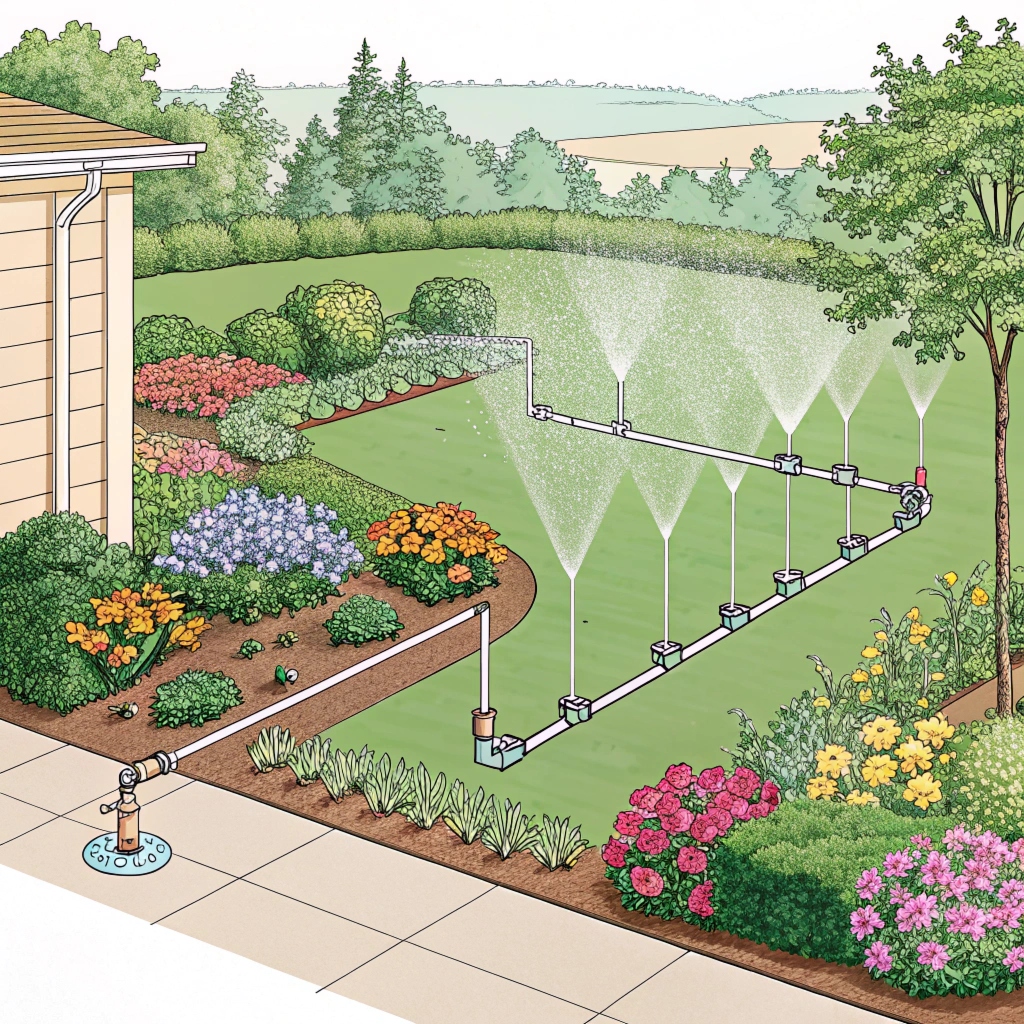
We design systems using various distribution methods including overhead sprinklers, drip irrigation, and subsurface delivery. Method selection depends on plant requirements, water efficiency goals, and site constraints.
Each method offers distinct advantages in terms of coverage, efficiency, and maintenance. Our designs combine methods as needed to optimize performance across different landscape zones.
Water Conservation Strategy
Smart Sensors
Rain sensors and soil moisture monitoring ensure irrigation occurs only when necessary, preventing overwatering and waste.
Climate-Based Control
Weather-based controllers automatically adjust schedules based on temperature, humidity, and precipitation forecasts.
Precision Application
Efficient system design eliminates waste and runoff through targeted water delivery matched to plant requirements.
Irrigation Methods
We design systems using various distribution methods selected based on plant requirements, water efficiency goals, and site constraints.

Sprinkler Systems
Overhead sprinklers for large areas and turf coverage with uniform distribution patterns.
Drip Irrigation
Precise water delivery directly to plant roots, minimizing evaporation and runoff.
Smart Control
Automated systems with weather-based scheduling and remote monitoring capabilities.
Efficiency Optimization
System efficiency depends on proper sizing, pressure management, and scheduling. We design systems that minimize water waste while maintaining adequate coverage and plant health.
Efficiency measures include pressure regulation, flow control, and zone-specific scheduling. These elements work together to reduce water consumption and operational costs.