Project Approach
Systematic methodology for design development
Design Process
Our project approach follows a systematic methodology from initial site assessment through final documentation. Each phase builds upon previous work to develop comprehensive design solutions.
Phase 1: Site Assessment
Initial evaluation includes site survey, existing condition documentation, and requirement gathering. We analyze topography, existing infrastructure, plant inventory, and client objectives to establish design parameters.
Assessment documentation includes photographs, measurements, and condition notes. This information forms the foundation for all subsequent design decisions.
Phase 2: Concept Development
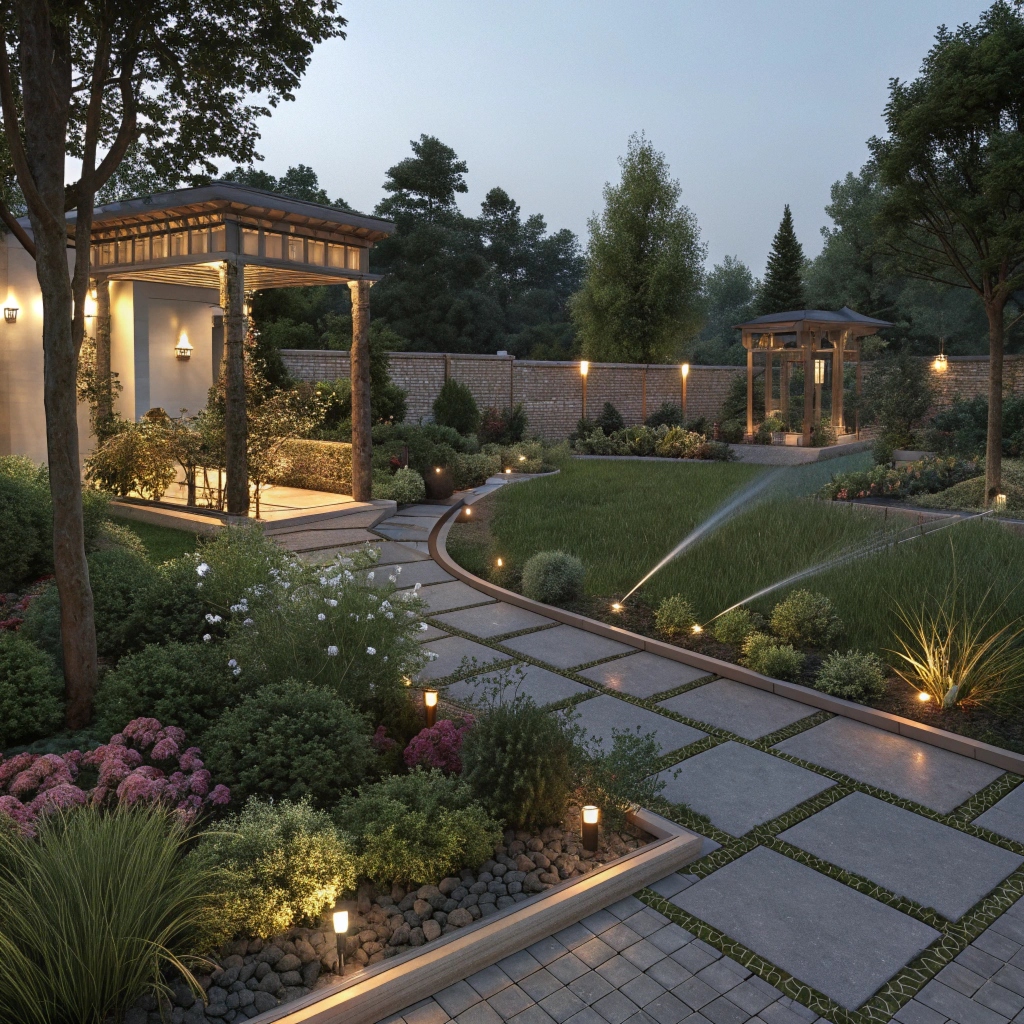
Concept development translates assessment findings into preliminary design ideas. We explore lighting strategies, irrigation layouts, and system configurations that address identified requirements.
Concepts are presented through diagrams, sketches, and written descriptions. Multiple approaches may be developed to explore different solutions before selecting preferred directions.
Phase 3: Design Development
Selected concepts are developed into detailed designs with specific fixture placements, pipe routing, zone definitions, and component specifications. Technical calculations ensure system performance and code compliance.
Design development includes coordination between lighting and irrigation systems, integration planning, and material selection. All elements are specified to support implementation.
Phase 4: Documentation
Final documentation includes detailed plans, specifications, schedules, and technical notes. Documentation provides complete information for system implementation while maintaining design intent.
Documentation packages include installation guidelines, operation manuals, and maintenance recommendations. All information is organized for easy reference during implementation and operation.
Phase 5: Review & Refinement
Design review involves collaboration with clients to refine solutions and ensure alignment with objectives. Revisions address feedback while maintaining technical integrity and performance requirements.
Refinement continues until designs meet all requirements and receive client approval. Final designs represent optimal solutions balancing technical performance, aesthetic goals, and practical considerations.
Project Milestones
Initial Consultation
Comprehensive discussion of project goals, site conditions, and client requirements establishes the foundation for design development.
Design Development
Iterative development of design concepts with client feedback and refinement ensures optimal solutions that meet all requirements.
Final Documentation
Complete technical documentation package provides all information needed for contractor implementation and system installation.
Quality Assurance
Every design undergoes comprehensive quality review including technical accuracy, code compliance verification, and design intent validation.
Peer Review
Design review by experienced professionals ensures quality and completeness.
Technical Verification
All calculations and specifications are verified for accuracy and compliance.
Coordination Review
Final coordination ensures integration with other project elements.
Collaboration
Our approach emphasizes collaboration with clients, contractors, and other design professionals. Regular communication ensures designs evolve appropriately and address all project requirements.
Collaboration includes design reviews, technical discussions, and coordination meetings. These interactions ensure designs integrate effectively with other project elements and meet all stakeholder needs.